

Fight Lithium-ion Battery Fires With Home Fire Sprinklers
NEW RESEARCH FROM UL RESEARCH INSTITUTES TESTED RESIDENTIAL FIRE SPRINKLERS IN E-MOBILITY DEVICES
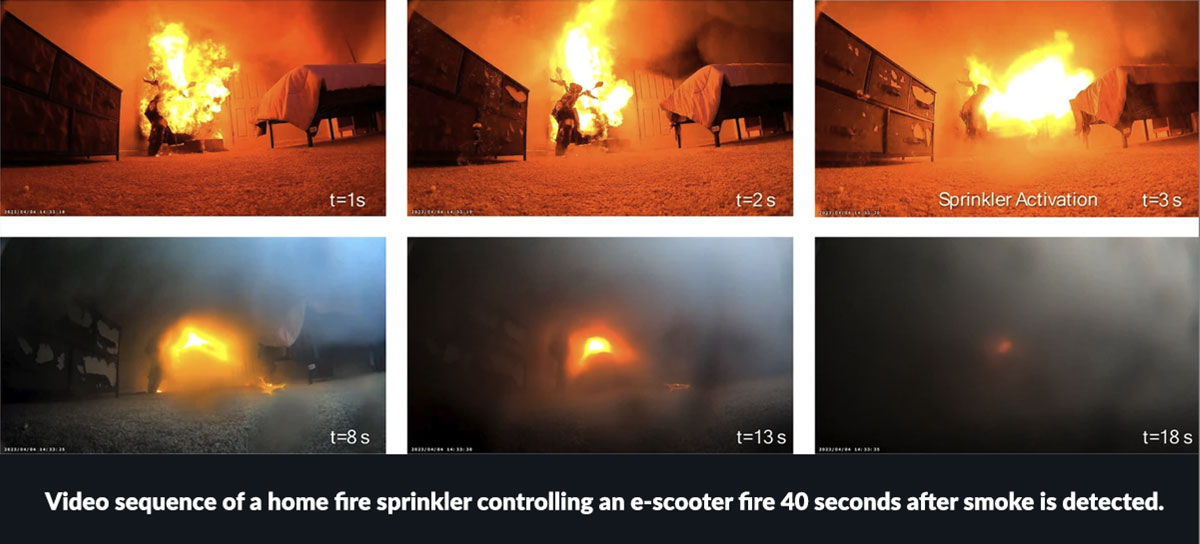
Home fire sprinklers can stop a lithium-ion battery fire from spreading. Without sprinklers, flashover can occur in less than 60 seconds.
Residential sprinklers are designed to control a fire in the room where it starts. Each sprinkler is heat-activated, so only the sprinklers exposed to high temperatures activate. In most fires, that means only one or two, not every sprinkler in the house.
The spray wets surfaces and nearby materials to slow fire growth and help prevent flashover, the point at which everything in a room ignites at once. The goal is to give occupants more time to get out and to limit the fire’s spread until firefighters arrive.
Why Lithium-ion Batteries Are a Growing Concern
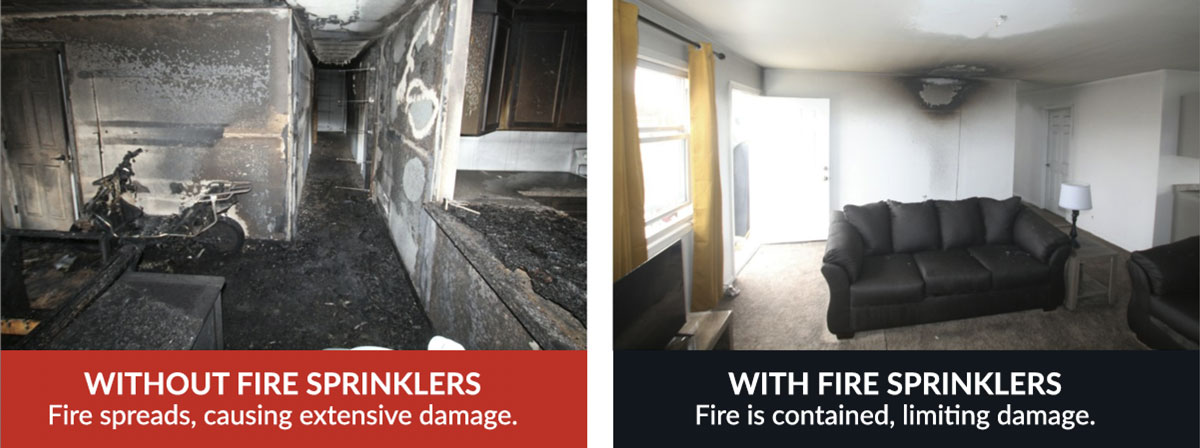
Lithium-ion e-mobility devices, like e-scooters, are now common in homes, and they present a particular fire hazard. When one of these batteries goes into thermal runaway, it can ignite or explode. The room can be fully engulfed and reach flashover in under a minute, leaving occupants very little time to get out on their own.
Compared with other residential fires, thermal runaway fires grow far faster. That speed can expose people to severe, potentially fatal heat and toxic smoke before firefighters arrive. The fire service has asked researchers and manufacturers for solutions to this hazard.
WHAT THE TESTING FOUND
In April 2023, UL Research Institutes’ Fire Safety Research Institute (FSRI) tested whether a residential sprinkler system could limit the growth of e-scooter battery fires. It worked with the National Fire Sprinkler Association to install a system built to the NFPA 13D residential design standard.

Test setup
• Five experiments in total
• Four in a closed bedroom (two by overcharging the battery, two by overheating it)
• One in a living room (by overcharging)
• Sprinklers activated at gas temperatures of 155°F and above
• Water flowed for 10 minutes at 13 to 18 gallons per minute
Results
• Across all five experiments, the sprinklers prevented flashover.
• Fire did not spread to secondary items in the room.
• The room of origin was still damaged, as expected.
Still to come: FSRI is analyzing thermal and toxic exposure data and will publish it in a technical report on the fire dynamics of e-mobility device thermal runaway.
Source: UL Research Institutes, Fire Safety Research Institute, “The Impact of a Residential Sprinkler System During E-Mobility Device Experiments.”